
BUILT RIGHT FROM THE GROUND UP
Scale Foundation Planning
The performance of a weighing system starts well before the scale is installed. Proper foundation planning helps provide the stability, drainage, access, and structural support needed for accurate weighing and dependable long-term operation.
Precision Point Scales helps customers evaluate foundation requirements for truck scales and other heavy-capacity weighing systems based on equipment configuration, site conditions, traffic patterns, installation approach, and operational needs. Our team can coordinate with customers, contractors, engineers, and project partners to help ensure the scale foundation is planned around the equipment it will support.
From initial site review through installation coordination, thoughtful foundation planning can help reduce future maintenance concerns, simplify service access, and support reliable scale performance over time.

Plan Your Scale Foundation With Confidence
Start with the right foundation. Precision Point Scales can help review site conditions, scale configuration, drainage, access, and installation requirements before construction begins.
Why Scale Foundation Planning Matters
A scale foundation affects more than installation. It can influence weighing stability, drainage, service access, traffic flow, maintenance requirements, and long-term system reliability.
Site Conditions
Evaluate soil conditions, bearing capacity, grade, groundwater, drainage, and environmental factors before construction.
Drainage Planning
Plan for runoff, water exposure, drainage paths, and moisture control around the scale and foundation area.
Traffic Flow
Consider vehicle approach, turning space, queueing, scale access, and movement through the surrounding operation.
Scale Requirements
Match the foundation to scale type, capacity, dimensions, installation method, and equipment configuration.
Service & Maintenance Access
Provide practical access for inspection, cleaning, calibration, maintenance, and future repairs.
Long-Term Performance
Support scale stability, repeatable performance, and reduced risk of foundation-related operating issues.
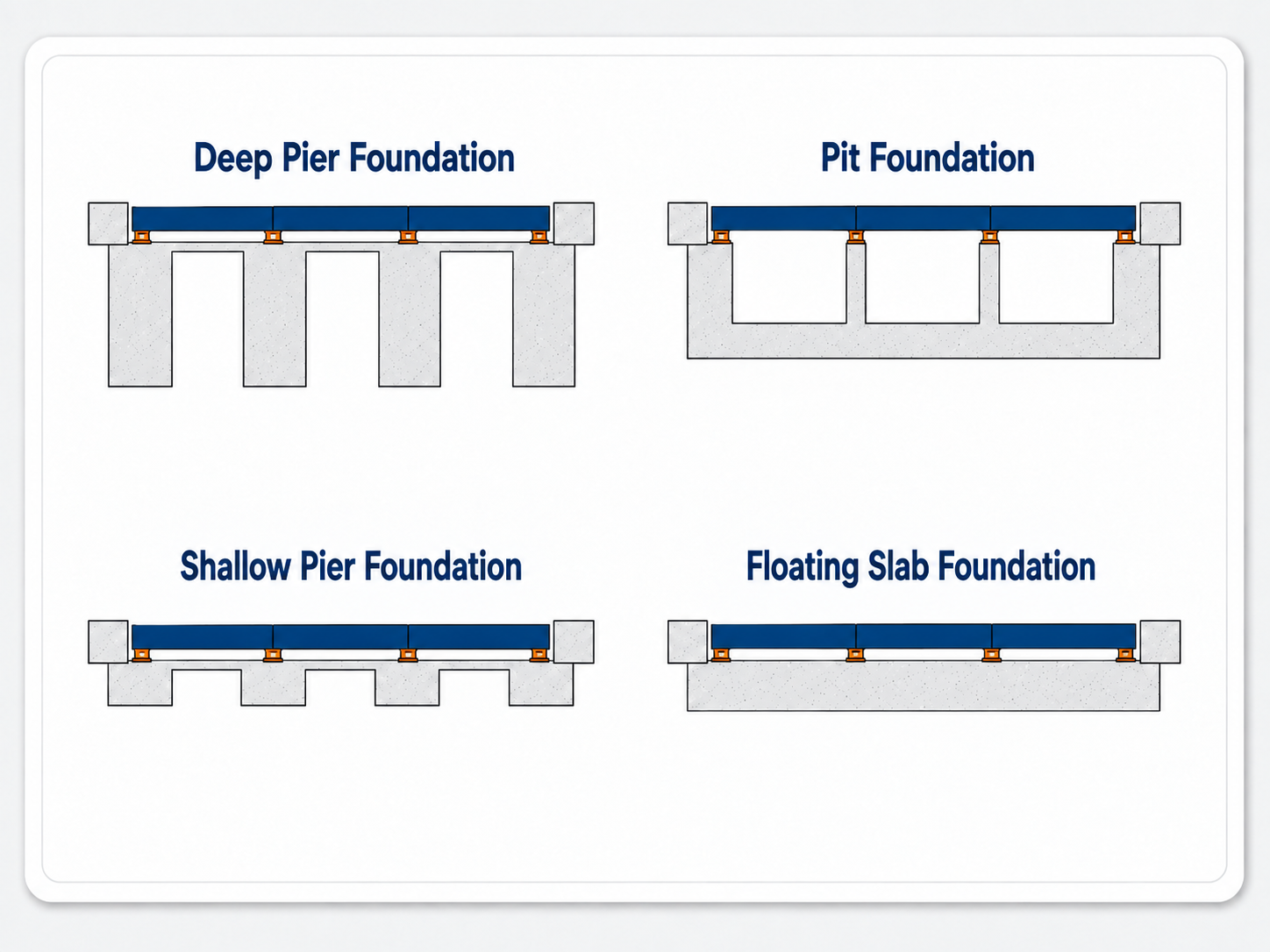
Scale Foundation Types at a Glance
Foundation Type | Best Used For | Planning Considerations |
|---|---|---|
Deep Pier Foundation | Sites requiring deeper structural support or challenging soil conditions | Pier depth, soil conditions, structural requirements, drainage, and installation access |
Shallow Pier Foundation | Stable sites where extensive excavation may not be required | Soil bearing capacity, pier placement, site preparation, and scale configuration |
Floating Slab Foundation | Above-ground installations with suitable site and soil conditions | Slab design, drainage, settlement potential, reinforcement, and site preparation |
Pit Foundation | Applications requiring a scale deck positioned flush with the surrounding roadway | Excavation, drainage, service access, cleaning requirements, ventilation, and water management |
The appropriate foundation type depends on scale design, soil conditions, traffic requirements, drainage, available space, and installation goals. Precision Point Scales can help coordinate foundation requirements with the selected weighing system.
Site Planning Considerations
Foundation planning should account for how the weighing system will be installed, accessed, serviced, and used throughout its operating life.
Drainage & Water Management
Plan grading, runoff, drainage paths, pumps where applicable, and access for cleaning or inspection.
Traffic Flow & Site Layout
Consider vehicle approach, turning radius, queue space, traffic direction, bypass areas, and surrounding equipment.
Installation Coordination
Coordinate foundation layout, scale dimensions, electrical requirements, conduit, equipment access, and installation timing.
Foundation Planning & Installation Coordination
A scale foundation must work with the weighing equipment, not simply fit beneath it. Precision Point Scales helps coordinate equipment specifications with foundation and site requirements so construction and installation teams have the information needed before the scale arrives.
Depending on the project, coordination may include foundation dimensions, scale placement, conduit and electrical requirements, drainage considerations, equipment access, installation sequencing, and startup planning.
Why Precision Point Scales for Foundation Planning?
Foundation requirements vary by scale design, operating environment, site conditions, and project goals. Precision Point Scales brings weighing-system expertise into the planning process to help customers prepare for a successful installation and dependable long-term performance.
Equipment-Focused Planning
Foundation requirements are reviewed in relation to scale type, capacity, dimensions, configuration, and operating needs.
Site Coordination
Planning considers traffic flow, drainage, access, available space, surrounding operations, and installation conditions.
Installation Readiness
Coordination helps align foundation construction, equipment delivery, utilities, installation, and system startup.
Long-Term Performance
Thoughtful planning helps support weighing stability, service access, maintainability, and reliable operation over time.